


 Calculator
 Price Guide
 Test Drive
 Brochure
The Honda ZR-V e:HEV, while capable, fills an awkward gap in the modern-day Honda lineup.
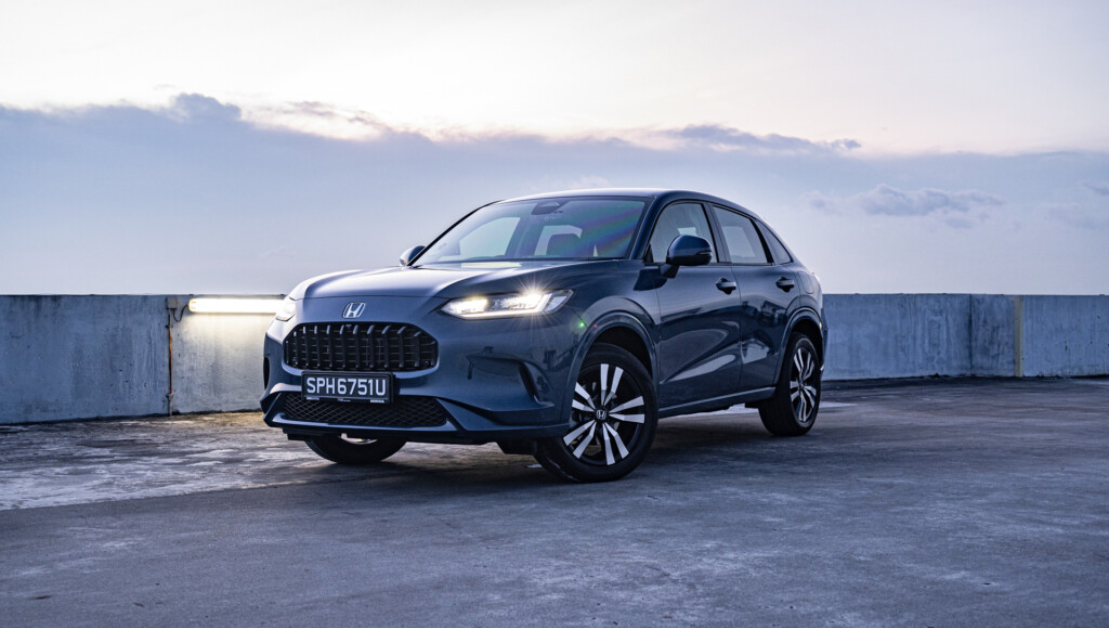
According to Google, each person has seven doppelgangers – people who look exactly alike – out there. If nature has to resort to carbon copies now and then, what more car designers?
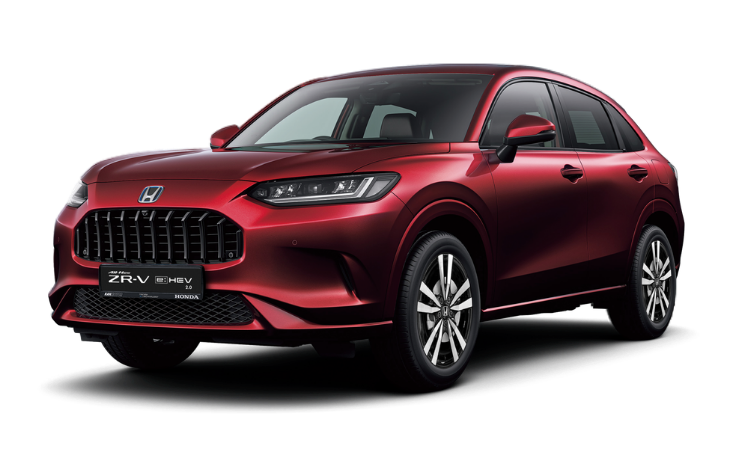
At a glance, the new Honda ZR-V resembles the Maserati Grecale, especially from the front. No great sin in that. The Grecale is a good-looking sport utility vehicle (SUV). Any similarity between the two, however, ends there.
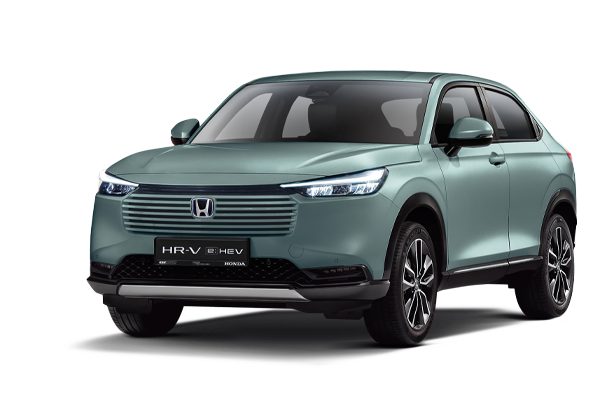
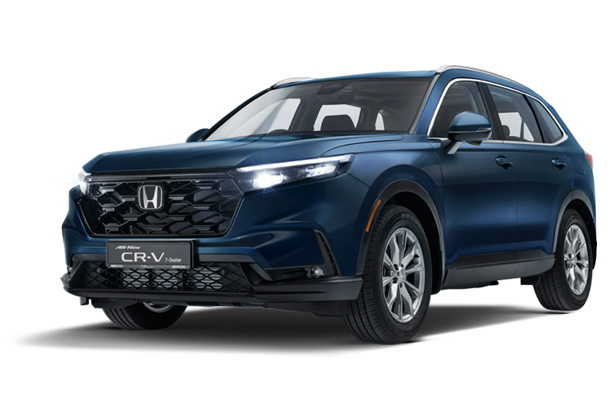
The ZR-V is a new SUV from Honda. Size-wise, it sits between the larger Honda CR-V and smaller HR-V, both of which have had measurable success over the years. Will the middle child do as well?
The ZR-V certainly has good genes. It shares a platform and drivetrain with the latest Honda Civic 2.0, which was reviewed here in September 2025 and rated favourably.
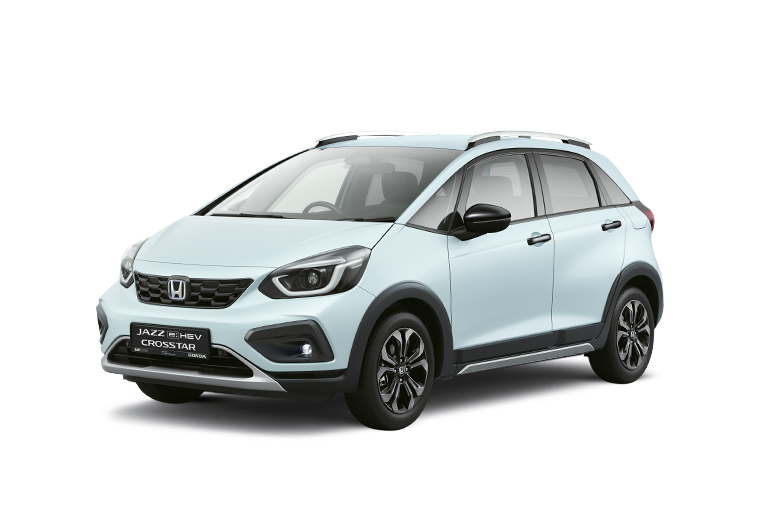
It could have been named Civic Cross (like the Honda Jazz Crosstar or Toyota Corolla Cross), but ZR-V stands for Z Runabout Vehicle, alluding to the model’s target Gen Z audience.
At 4,567mm long, 1,840mm wide and 1,621mm tall with a 2,655mm wheelbase and a 1,567kg kerb weight, the ZR-V is slightly smaller but heavier than the Civic.
Its SUV form makes it taller, of course. But its ground clearance of 185mm is modest, even compared with the hybrid HR-V’s 195mm. Lined up side by side, the more compact HR-V will thus appear more SUV-like than the ZR-V.
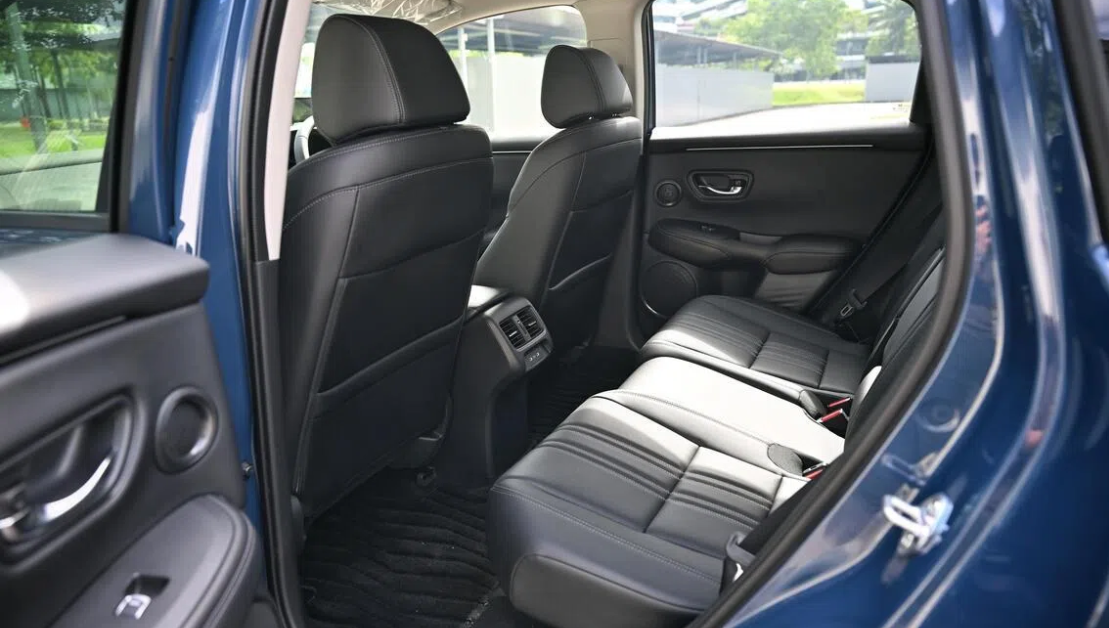
Inside, there is something unique about the ZR-V. While the driver can attain a high sitting position with an adjustable seat height, occupants in the second row will feel like they are in an electric saloon. The ZR-V’s rear floor is flat but a little raised.
Rear legroom may prove a little tight for taller individuals, while headroom should still have allowance to spare. The Civic’s wheelbase is slightly longer at 2,735mm, but the ZR-V has a wee bit more width.
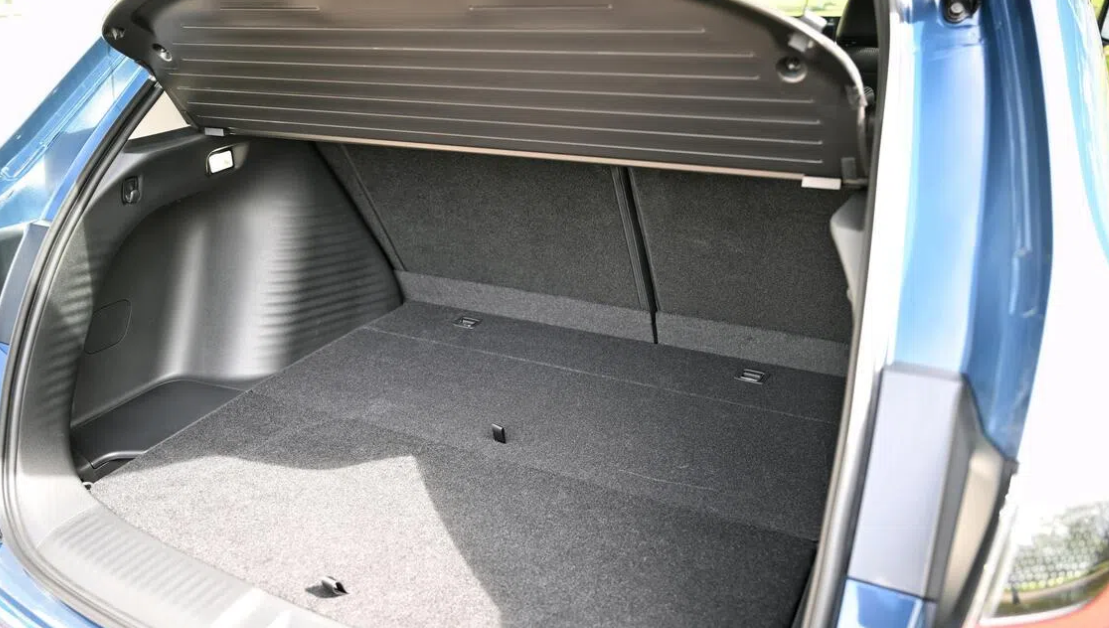
The boot is smaller than expected too. At 370 litres, it cannot accommodate bulky items such as a bi-fold bicycle with its handlebar intact.
Most consumers do not usually carry bulky items in their cars. But should such an occasion arise, collapsing either or both sides of the 60:40 split rear seat back will do the trick.
The ZR-V has better fit, finish and features than the smaller HR-V. Its cockpit is very similar to the Civic’s, with honeycomb air-conditioning vents that look rather stylish but can be a challenge to clean. Cabin panels are wrapped in a soft, puffy cladding, somewhat old-school for a Gen Z vehicle.
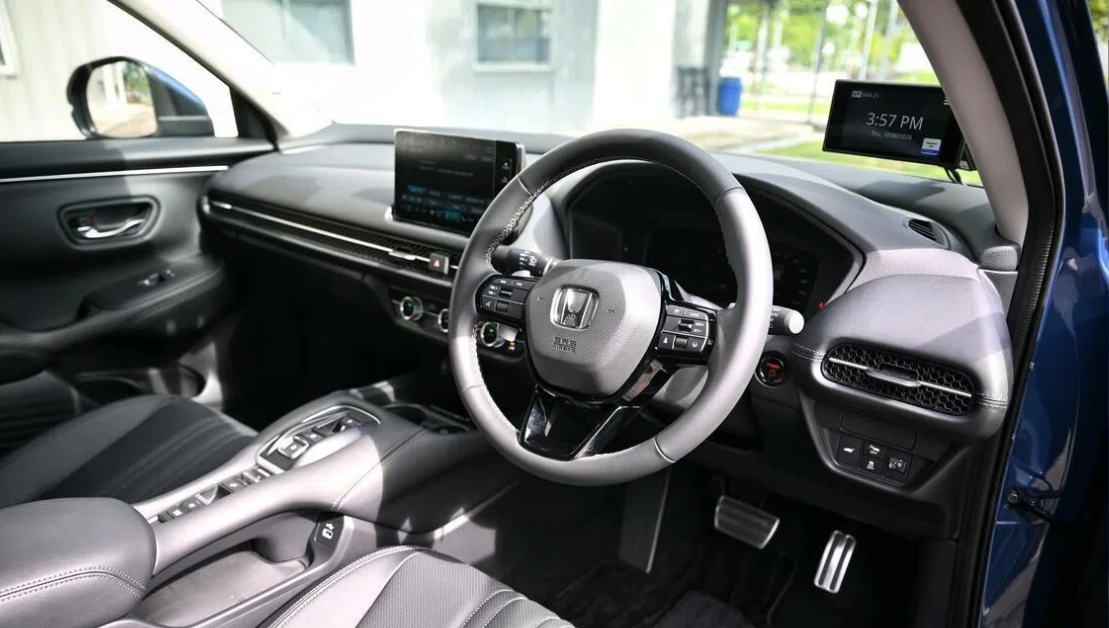
Its equipment list is on a par with that of many new cars, including electric models. You will find adaptive cruise control (more refined than that in the HR-V), a wireless phone charger, wireless Apple CarPlay (but cabled Android Auto), dual-zone climate control, a 360-degree reverse camera and a 12-speaker Bose hi-fi.
It also has proximity-triggered door lock and unlock – one of the best modern automotive inventions ever.
Instead of a transmission lever, the ZR-V has shift buttons. Very 21st century, but not the sort of thing that appeals to me. Admittedly, I am not in the model’s intended demographic.
One thing that the ZR-V does not offer, but which is found in the less expensive HR-V, is on-board navigation. I suppose Honda reckons that if you connect your phone to the infotainment system, you will not need hardwired navigation.
Honda’s hybrid system, with one traction motor and one generator motor, seems superfluous, but works quite well in the ZR-V. The car can go into electric-only mode more often than previous hybrids from the company. When its 2-litre combustion engine kicks in again, it does so quietly and smoothly.
The car is bland, but flawless at the wheel. Its ride and handling qualities pass muster, but are not exactly sterling compared with its peers. On paper, it is slightly punchier than the new RAV4 hybrid, which has a bigger 2.5-litre engine. But in real life, Honda’s stated 7.7-second century sprint is not noticeably superior to Toyota’s eight-second timing.
Honda’s tested fuel economy of 6.5 litres/100km is poorer than its declared 5.7 litres/100km, and also poorer than the bigger and heftier RAV4’s tested 5.4 litres/100km. Even so, filling up the ZR-V’s 57-litre tank will give you 877km worth of driving in Singapore. (Interestingly, the longer but lighter Civic 2.0 has a 40-litre tank and a fairly decent 755km range.)
If you find the Civic too old, the CR-V too big and the HR-V too small, then the ZR-V is worth checking out.
Credits: The Straits Times.
Author: Christopher Tan
Original Source: https://www.straitstimes.com/life/motoring/hondas-new-compact-suv-targets-gen-z
